Renowned trademarks. A bitten apple does not resemble a pear – Apple Inc. loses to Pear Technologies Ltd before the Court of Justice of the European Union in a case concerning the protection of the “apple” trademark

The application for a trademark by Pear Technologies LTD and Apple Inc.’s opposition to registration of the trademark
Pear Technologies LTD has filed a word and figurative trademark in the European Union Intellectual Property Office.

Apple Inc. has filed an objection against the registration of the trademark of Pear Technologies LTD based on a previously registered trademark.
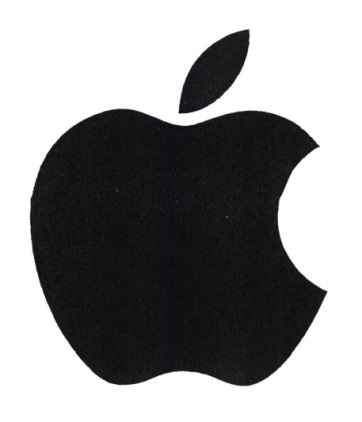
This trademark is undoubtedly renowned.
The trademarks compared were intended for identical and similar goods and services in classes 9, 35 and 42 of the International (Nice) Classification of Goods and Services
Previous decisions of the European Union Intellectual Property Office
In the decision of 18 January 2017, the Board of Appeal of the EU Intellectual Property Office found that there was little similarity between the trademarks and slight similarity in the conceptual (semantic) layer, which in the case of a renowned trademark may be sufficient to recognize the trademark applied for as taking advantage of or damaging to the reputation of the earlier mark. As regards the visual layer, the Board of Appeal found that there was a certain degree of similarity between the trademarks on the ground that they represented rounded figures of fruit, with an elongated graphic element inclined to the right above the main graphic element. At the conceptual (meaning) level, the Board of Appeal found that, although apples and pears are distinguishable fruits, they are closely related in terms of their biological nature (origin, size, colors) and connected in many ways throughout territory of the European Union, and constitute an alternative to each other in the eyes of the consumer. In addition, the Board of Appeal found that, due to the uniqueness and high reputation of the earlier mark, the allusive and “slightly mocking” image of the pear featured in the mark applied for, a certain mental connection was made with the earlier mark. The Board of Appeal pointed to the risk that the use of the mark applied for would constitute an unfair use of the strong distinctive character and reputation of the earlier mark. The Board of Appeal found that the positive attributes associated with the reputation of the earlier trademark could be transferred to the applied trademark applied in the scope in which the goods and services marketed under the mark applied for are identical or similar. The Board of Appeal essentially based this conclusion on the earlier mark’s high reputation on the market, on the connection between the trademarks considered, on the fact that the use of a piece of fruit is highly distinctive and unusual in a sector, with the identity or similarity between goods and services covered by the conflicting signs and the assumption that the mark applied for “imitated” and at the same time “ridiculed and disavowed” the earlier mark.
In view of the above and the fact that the trademark of a “bitten apple” is renowned, the Board of Appeal upheld its decision to uphold the objection and dismissed the appeal of Pear Technologies LTD.
Judgment of the Court of Justice of the European Union (Case T‑215/17),
- Assessment of the similarity of trademarks in terms of their visual layer
In the judgment of 19 January 2019, the Court of Justice of the European Union (case T-215/17), indicated that the graphic element in the form of a pear is not uniform like an apple, but consists of many graphic elements, e.g., in the form of square-like figures with rounded sides in different sizes, which have been irregularly distributed on the background of the pear. In the compared trademarks, the shape of the main graphic element (apple vs. pear) and the stalk (leaf) over the fruit is also different. In the Court’s view, what is very important for the assessment of the trademarks subject to comparison is that the mark applied for contains the word element PEAR, which emphasizes the differences between the signs. The Court also found that a similar anatomical structure of fruits, including their rounded shape, does not create visual similarities of signs which may adversely affect the reputation of a previously registered trademark in the form of a “bitten apple”. The Court found that the differences between the pear and apple are so important that consumers can easily and clearly notice them.
The Court also noted that the reputation of the earlier mark is not relevant for the assessment of the similarity of the signs, but only affects the possibility of linking the two signs and assessing whether this relationship will have a negative impact on the reputation of the renowned mark.
As a consequence, the Court found that the overall visual reception of the trademarks by consumers would be different.
- Assessment of the similarity of trademarks in terms of their conceptual (semantic) layer
In the Court’s opinion, the similarity of the trademarks being compared cannot be determined solely because they represent “silhouettes” of fruit. If we assume such an assumption, all trademarks imitating fruit could be considered conceptually similar (semantically) to Apple Inc.’s trademark. The Court found that the apple and pear do not have to constitute an alternative to the consumer. On the other hand, the strong distinctive character of the renowned trademark is not relevant for the assessment of the similarity of the two signs on the market, but it affects the assessment of the relationship between the mark applied for and the renowned trademark of the recipient (purchaser of the good/service). In the content of the justification we also read that, in semantic terms, the compared trademarks refer to different categories of objects (fruit), i.e., apple vs. pear. In this context, it is not without significance that we compare the “bitten apple” with a full, “intact pear” and a leaf with a stalk. Thus, conceptually, consumers will perceive trademarks in such a way that they are dealing with a bitten apple with a leaf and a hollow pear with a stalk, which in consequence leads to the conclusion that the recipients will not associate these two trademarks and the sign will not violate the trademark’s reputation nor will it benefit from the lack of connection between the compared trademarks in the awareness of the average consumer. In the final section of the justification, the Court stressed that the biological relationship does not affect the conceptual similarity of the compared trademarks, because consumers do not have such awareness and, additionally, it has not been proven.
Final conclusions
The Court found that the trademarks subject to comparison are not visually and conceptually similar. Of course, one can argue that an apple is not similar to a pear, but reading the justification of the judgment closer, it should be considered that the Court has made a thorough legal and factual analysis and has rightly recognized that the case should be re-examined by the Board of Appeal of the EU Intellectual Property Office.

Grzegorz Kuchta
Attorney at lawContact the author of the publication:
Mobile: +48 607 205 792
E-mail: gk@kancelariakuchta.pl